How Podiatric Care Supports Limb Salvage

Limb salvage focuses on preserving a foot or leg when serious conditions threaten tissue health and function. Podiatric care plays a key role in this process, especially for individuals with diabetes, poor circulation, or chronic wounds. Early evaluation allows problems such as ulcers, infection, or pressure-related damage to be identified before they worsen. Treatment may include wound care, pressure relief, infection control, and improving blood flow, when possible. Careful monitoring and regular follow-up help track healing and prevent complications. In some cases, surgical procedures are used to remove damaged tissue or correct deformities that place the limb at risk. Education is also important, as patients need to learn how to protect their feet and recognize early warning signs. With a coordinated approach, many limbs can be preserved and function maintained. If you have a non-healing foot wound or signs of infection, it is suggested that you see a podiatrist for a proper diagnosis and appropriate treatment.

Limb salvage can be an effective way in preventing the need for limb amputation. If you have diabetes, cancer, or any other condition that could lead to foot amputation if left unchecked, consult with one of our providers from Advanced Foot & Ankle Care Centers. Our providers will assess your condition and provide you with quality foot and ankle treatment.

What Is Limb Salvage?

Limb salvage is the attempt of saving a limb, such as the foot from amputation. Podiatrists also try to make sure that there is enough function in the foot after the salvage that it is still usable. Diabetes is the number one cause of non-traumatic amputations in the United States. Those with diabetes experience poor blood circulation, which prevents proper healing of an ulcer. If the ulcer is left uncheck, it could become infected, which could result in the need for amputation.

However, there are other causes as well, such as cancer and traumatic injury. Links between higher mortality rates and amputation have been found. This translates into higher healthcare costs, and a reduced quality of life and mobility for amputees. Podiatrists have attempted to increase the prevalence of limb salvage in an attempt to solve these issues.

Diagnosis and Treatment

Limb salvage teams have grown in recent years that utilize a number of different treatments to save the infected limb. This includes podiatrists that specialize in wound care, rehabilitation, orthotics, and surgery. Through a combination of these methods, limb salvage has been found to be an effective treatment for infected limbs, and as an alternative to amputation. Podiatrists will first evaluate the potential for limb salvage and determine if the limb can be saved or must be amputated. 

If you have any questions, please feel free to contact our offices located in Nashville, Smyrna, Spring Hill, Columbia, Dickson, Fairview, Hohenwald, TN and Midtown, TN . We offer the newest diagnostic and treatment technologies for all your foot care needs.

Read more about Limb Salvage

Simple Habits That Help Keep Feet Healthy

Healthy feet support comfort, mobility, and an active lifestyle. Simple daily habits can go a long way in protecting them. Washing the feet each day and drying carefully between the toes helps prevent skin infections. Moisturizing the tops and bottoms of the feet keeps skin from becoming dry and cracked, although lotion should not be placed between the toes. Toenails should be trimmed straight across to help prevent painful ingrown nails. Wearing well-fitted shoes with good support can reduce pressure and protect the feet from injury. It is also helpful to change socks regularly and choose breathable materials that keep feet dry. Regular movement and gentle stretching can keep muscles and joints working properly. Paying attention to any new pain, swelling, or changes in the skin or nails is important. If you notice persistent foot discomfort or unusual changes, it is suggested that you see a podiatrist for a proper diagnosis and appropriate treatment.

Everyday foot care is very important to prevent infection and other foot ailments. If you need your feet checked, contact one of our providers from Advanced Foot & Ankle Care Centers. Our providers can provide the care you need to keep you pain-free and on your feet.

Everyday Foot Care

Often, people take care of their bodies, face and hair more so than they do for their feet. But the feet are a very important aspect of our bodies, and one that we should pay more attention to. Without our feet, we would not be able to perform most daily tasks.

It is best to check your feet regularly to make sure there are no new bruises or cuts that you may not have noticed before. For dry feet, moisturizer can easily be a remedy and can be applied as often as necessary to the affected areas. Wearing shoes that fit well can also help you maintain good foot health, as well as making it easier to walk and do daily activities without the stress or pain of ill-fitting shoes, high heels, or even flip flops. Wearing clean socks with closed shoes is important to ensure that sweat and bacteria do not accumulate within the shoe. Clean socks help to prevent Athlete’s foot, fungi problems, bad odors, and can absorb sweat.

If you have any questions, please feel free to contact our offices located in Nashville, Smyrna, Spring Hill, Columbia, Dickson, Fairview, Hohenwald, TN and Midtown, TN . We offer the newest diagnostic and treatment technologies for all your foot care needs.

Read more about Every Day Foot Care

Understanding Cuboid Syndrome

Cuboid syndrome affects a small bone on the outer side of the foot, called the cuboid. This bone helps the foot move and stay stable when walking. In cuboid syndrome, the bone shifts slightly out of its normal position. This can cause pain along the outside of the foot and make it hard to stand or walk comfortably. The problem often happens after an ankle sprain or from repeated stress from running or jumping. Cuboid syndrome can also be linked to having flat feet or tight muscles in the lower leg. A podiatrist can examine the foot, check how it moves, and use imaging to confirm the cause of the pain. Treatment plans include gently guiding the bone back into place and using supportive devices. This includes items like braces, shoe inserts, or padding that help hold the foot in a stable position and reduce strain. If you have symptoms of cuboid syndrome, it is suggested that you make an appointment with a podiatrist for help.

Foot Pain

Foot pain can be extremely painful and debilitating. If you have a foot pain, consult with one of our providers from Advanced Foot & Ankle Care Centers. Our providers will assess your condition and provide you with quality foot and ankle treatment.

Causes

Foot pain is a very broad condition that could be caused by one or more ailments. The most common include:

  • Bunions
  • Hammertoes
  • Plantar Fasciitis
  • Bone Spurs
  • Corns
  • Tarsal Tunnel Syndrome
  • Ingrown Toenails
  • Arthritis (such as Gout, Rheumatoid, and Osteoarthritis)
  • Flat Feet
  • Injury (from stress fractures, broken toe, foot, ankle, Achilles tendon ruptures, and sprains)
  • And more

Diagnosis

To figure out the cause of foot pain, podiatrists utilize several different methods. This can range from simple visual inspections and sensation tests to X-rays and MRI scans. Prior medical history, family medical history, and any recent physical traumatic events will all be taken into consideration for a proper diagnosis.

Treatment

Treatment depends upon the cause of the foot pain. Whether it is resting, staying off the foot, or having surgery; podiatrists have a number of treatment options available for foot pain.

If you have any questions, please feel free to contact our offices located in Nashville, Smyrna, Spring Hill, Columbia, Dickson, Fairview, Hohenwald, TN and Midtown, TN . We offer the newest diagnostic and treatment technologies for all your foot care needs.

Read more about Foot Pain

Foot Bones Commonly Affected by Stress Fractures

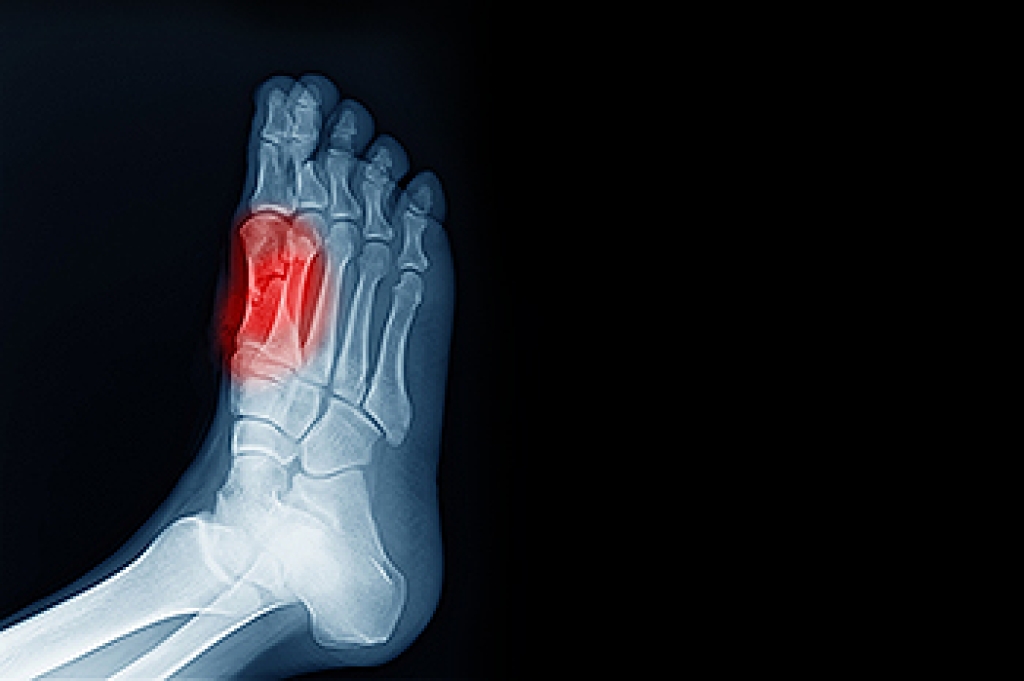
Stress fractures are small cracks in bone that develop when repeated force exceeds the bone’s ability to repair itself. In the foot, certain bones are more commonly affected because they bear body weight with every step. The second and third metatarsals, which are the long bones that connect the toes to the midfoot, are frequent sites of stress fractures. The heel bone can also develop stress fractures due to constant impact from walking and playing sports. Another high-risk area is the navicular bone near the top of the midfoot, which plays a key role in maintaining the arch. Symptoms of stress fractures include pinpoint tenderness, deep aching pain, swelling, and discomfort that worsens with activity. A podiatrist can evaluate gait mechanics and use advanced imaging to confirm the diagnosis. If you have symptoms of stress fractures in the feet, it is suggested that you make an appointment with a podiatrist for an exam, diagnosis, and treatment.

Stress fractures occur when there is a tiny crack within a bone. To learn more, contact one of our providers from Advanced Foot & Ankle Care Centers. Our providers can provide the care you need to keep you pain free and on your feet.

How Are They Caused?

Stress fractures are the result of repetitive force being placed on the bone. Since the lower leg and feet often carry most of the body’s weight, stress fractures are likely to occur in these areas. If you rush into a new exercise, you are more likely to develop a stress fracture since you are starting too much, too soon.  Pain resulting from stress fractures may go unnoticed at first, however it may start to worsen over time.

Risk Factors

  • Gender – They are more commonly found in women compared to men.
  • Foot Problems – People with unusual arches in their feet are more likely to develop stress fractures.
  • Certain Sports – Dancers, gymnasts, tennis players, runners, and basketball players are more likely to develop stress fractures.
  • Lack of Nutrients – A lack of vitamin D and calcium may weaken the bones and make you more prone to stress fractures
  • Weak Bones – Osteoporosis can weaken the bones therefore resulting in stress fractures

Stress fractures do not always heal properly, so it is important that you seek help from a podiatrist if you suspect you may have one. Ignoring your stress fracture may cause it to worsen, and you may develop chronic pain as well as additional fractures.

If you have any questions please contact our offices located in Nashville, Smyrna, Spring Hill, Columbia, Dickson, Fairview, Hohenwald, TN and Midtown, TN . We offer the newest diagnostic and treatment technologies for all your foot and ankle needs.

Read more about Stress Fractures of the Foot and Ankle

Nashville Foot &
Ankle Center

397 Wallace Road, Building C, Suite 411
Nashville, TN 37211
(615) 332-0330

Smyrna Foot &
Ankle Center

309 Quecreek Circle
Smyrna, TN 37167
(615) 220-2982

Spring Hill Foot &
Ankle Center

5073 Columbia Pike, Suite 230
Spring Hill, TN 37174
(615) 302-5400

Columbia Foot &
Ankle Center

1503 Hatcher Lane, Suite 100
Columbia, TN 38401
(931) 388-9922

Dickson Foot &
Ankle Center

111 U.S. 70 East, Suite 102
Dickson, TN 37055
(615) 229-3045

Fairview Foot &
Ankle Center

2340 Fairview Blvd., Ste. 600A
Fairview, TN 37062
(615) 229-3045

Hohenwald Foot &
Ankle Center

617 West Main Street
Hohenwald, TN 38462
(931) 388-9922

Midtown Foot &
Ankle Center

1916 Patterson Street, Suite 205
Nashville, TN 37203
(615) 332-0330
afacc locations
scroll to top